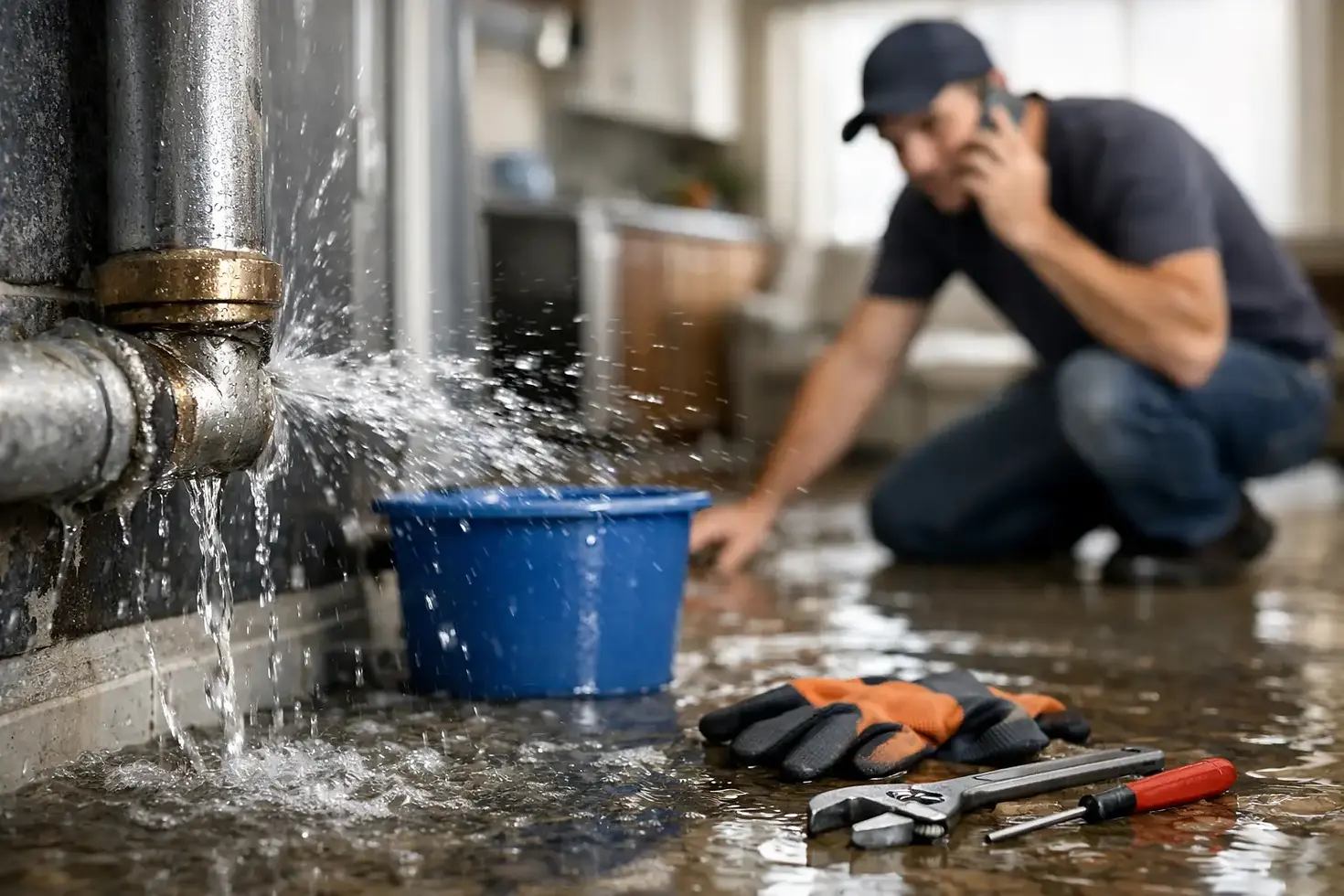
How to Handle Burst Pipe Flooding Safely
A burst pipe can release gallons of water in minutes, soaking floors, walls, furniture, inventory, and electrical systems before you have time to process what happened. Knowing how to handle burst pipe flooding gives you a better chance of limiting the loss, protecting everyone inside, and preventing a small plumbing failure from becoming a major restoration project.
The priority is not saving every item in the first few minutes. It is stopping the water, avoiding electrical and contamination hazards, and getting the property assessed and dried correctly. Move quickly, but do not take risks in standing water or attempt repairs that are beyond your ability.
How to Handle Burst Pipe Flooding in the First Minutes
Shut off the water source
If the break is visible and the local shutoff valve is safe to reach, turn it clockwise to stop the flow. For a larger leak, locate the building's main water shutoff valve. In many homes, it is near the water meter, water heater, basement wall, utility room, or where the main water line enters the property.
Property managers and business owners should ensure staff know where the main shutoff is located before an emergency occurs. In a commercial building, the correct valve may be in a mechanical room or other restricted area. If you cannot safely access it, contact a plumber or building maintenance professional immediately.
Once the water is off, open cold-water faucets briefly to relieve remaining pressure in the pipes. Do not turn the water back on until the failed pipe has been repaired and the plumbing system has been checked.
Treat electricity as a serious hazard
Water and electricity are a dangerous combination. If water is near outlets, appliances, a breaker panel, extension cords, or electrical equipment, stay out of the area. Do not walk through standing water to reach a panel or unplug devices.
If you can shut off power from a dry, safe location, do so. Otherwise, call a qualified electrician or emergency professional for guidance. For businesses, keep employees, customers, and visitors away from affected spaces until the area has been made safe.
Protect people before property
Move children, pets, tenants, customers, and anyone with limited mobility away from the flooded area. A wet floor can become slippery quickly, and collapsing ceiling materials are possible when water collects overhead.
If a ceiling is bulging, do not stand beneath it. Keep the room clear and wait for trained help. A burst pipe in a ceiling cavity can spread far beyond the point where water first becomes visible.
Take Simple Steps to Limit Water Damage
After the water supply is controlled and the area is safe, begin removing water and protecting unaffected belongings. Speed matters because water moves into baseboards, subfloors, insulation, drywall, cabinets, and framing. Materials that look dry on the surface may already be holding moisture underneath.
Use towels, mops, and a wet vacuum only where it is safe to do so. Move lightweight furniture, rugs, boxes, and electronics out of wet areas. Place furniture legs on blocks or foil to reduce staining and moisture transfer if the floor is wet but the furniture itself is dry.
Do not pull up carpeting, remove baseboards, open walls, or discard damaged materials before documenting the loss unless there is an immediate safety or contamination concern. Those decisions depend on how long the water was present, the water source, the affected materials, and what can be dried successfully.
For larger losses, professional extraction equipment is more effective than household tools. Fast extraction removes the bulk of the water, but it is only the first stage. Controlled structural drying is what helps prevent hidden moisture, material deterioration, and mold growth.
Document the Damage for Your Insurance Claim
Once immediate safety concerns are addressed, take clear photos and video of the burst pipe, affected rooms, wet materials, and any damaged belongings. Capture wide shots that show the scope of the flooding, then closer images of flooring, walls, furniture, inventory, and equipment.
Make a basic written record of when you discovered the leak, when the water was shut off, and the steps taken to reduce further damage. Keep receipts for emergency plumbing work, temporary accommodations, equipment rentals, and other reasonable expenses related to the loss.
Avoid throwing away damaged contents until your insurer has advised you or the items have been documented. If materials must be removed because they are unsafe, contaminated, or deteriorating, photograph them first when possible. Good documentation helps establish the scope of the loss and supports a smoother claims process.
Insurance coverage can vary based on the cause of the burst pipe, the policy terms, and whether there were signs of a pre-existing maintenance issue. Report the claim promptly, but do not delay necessary mitigation while waiting for an adjuster. Insurance carriers generally expect property owners to take reasonable steps to prevent additional damage.
Why Drying a Burst Pipe Flood Is More Than Surface Cleanup
A floor can feel dry while water remains trapped below it. Drywall can wick moisture upward from the bottom edge. Insulation can hold water against framing. Cabinet bases, wall cavities, and subfloor assemblies can conceal moisture that creates conditions for mold and material failure.
This is why fans alone are not always enough. Drying must be matched to the building materials, the amount of water involved, indoor humidity, and the moisture conditions inside the structure. Professional restoration teams use moisture detection equipment, commercial air movers, dehumidifiers, and ongoing readings to verify that materials are returning to an appropriate drying standard.
There are trade-offs. A small, clean-water leak caught immediately may require limited extraction and targeted drying. A pipe that has leaked for hours, affected multiple rooms, or saturated porous materials may require removal of damaged drywall, insulation, flooring, or contents. If the water has mixed with sewage, chemicals, or other contaminants, the response must also address safe removal and disposal.
Trying to seal up wet materials too early can trap moisture and make the eventual repair more expensive. The goal is not simply to make the space look normal. It is to return it to a dry, safe condition before repairs begin.
What Not to Do After a Pipe Bursts
Avoid using a regular household vacuum on standing water. Do not run ceiling fans, plug in appliances, or use electrical tools in wet areas. Do not enter a flooded basement if the power status is uncertain.
It is also wise to avoid cranking up the heat and assuming the problem is solved. Excessive heat can dry surfaces unevenly while moisture remains trapped within materials. Likewise, do not ignore a musty smell after cleanup. Odor can indicate lingering moisture or microbial growth that needs further assessment.
For businesses, do not reopen an affected area solely because visible water has been removed. Wet carpet backing, damaged electrical components, unstable ceiling materials, and contaminated contents can create risks for employees and customers. A documented drying plan helps protect the property and supports a responsible return to normal operations.
When to Call a Water Damage Restoration Professional
Call for professional help when water has spread beyond a small, contained area; soaked walls, ceilings, carpet, or wood flooring; reached electrical components; or sat for more than a short period. Immediate help is especially important if the loss occurred overnight, while the building was vacant, or in a finished basement or commercial space with extensive contents.
Drytek Solutions Inc. provides emergency extraction, structural drying, contaminated material removal, mold prevention support, and insurer-aligned documentation for property owners facing water losses. The right response begins with identifying where the water traveled, removing it quickly, and verifying that the building is truly dry.
A burst pipe is disruptive, but the first decisions after the break can protect far more than floors and walls. Shut off the water, keep people safe, document what happened, and arrange qualified drying before hidden moisture gets time to cause the next problem.


Comments