How to Remove Wet Building Materials Safely
A soaked carpet pad, swollen baseboard, or damp section of drywall can look like a small cleanup problem. It can become a much larger restoration issue within days. Knowing how to remove wet building materials safely helps limit mold growth, protect indoor air quality, and prevent moisture from remaining trapped inside walls, floors, and ceilings.
The right approach depends on the water source, how long materials were wet, and whether drying can restore them. Fast action matters, but tearing out materials without assessing the damage can create avoidable costs, spread contamination, or make an insurance claim harder to document.
Start With Safety and the Water Source
Before removing anything, stop the source of water if it is safe to do so. Shut off the supply line, address a roof leak, or contain the intrusion from a broken appliance. If water is near electrical outlets, appliances, a breaker panel, or wiring, keep clear of the area until power can be safely disconnected or assessed by a qualified professional.
Not all water losses carry the same health risk. Clean water from a supply line may allow some materials to be dried and saved if extraction begins quickly. Water from a washing machine overflow can become contaminated after moving through building materials. Water from sewage backups, toilet overflows containing waste, storm runoff, or flooding should be treated as contaminated. Porous materials exposed to contaminated water typically need removal and disposal rather than drying.
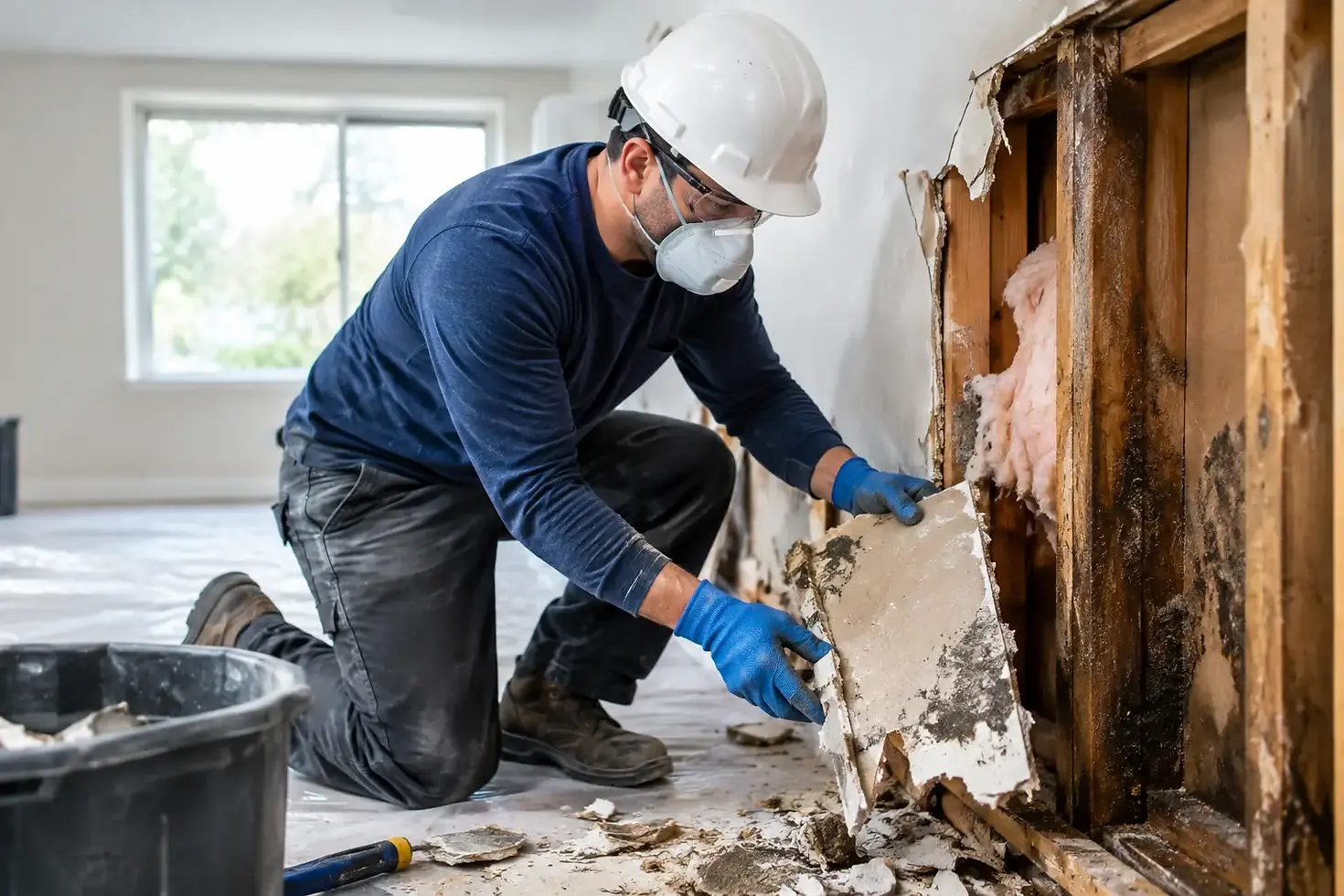
Wear appropriate personal protective equipment before handling wet debris. At minimum, use gloves, protective eyewear, sturdy footwear, and an N95 or better respirator when mold, dust, or contaminated materials may be present. Keep children, pets, tenants, and unprotected staff out of the work area.
Document Damage Before Removing Wet Building Materials
Take clear photos and video before moving furniture, pulling up flooring, or cutting drywall. Capture the source of the loss if possible, the affected rooms, water lines on walls, damaged contents, and close-up images of materials. Record the date, time, and actions taken to stop further damage.
This documentation can be useful for insurance reporting and helps establish which materials were affected. Keep samples, receipts, and disposal records when practical. If a property manager, insurer, or adjuster is involved, notify them promptly, but do not wait for an inspection before taking reasonable emergency steps to prevent additional damage.
Professional moisture documentation is especially valuable when water has traveled behind finishes. A floor can appear dry while moisture remains beneath it. A wall may feel normal at the surface while insulation and framing inside are still wet.
Decide What Can Be Dried and What Must Be Removed
The goal is not simply to remove every wet item. It is to remove materials that cannot be safely or effectively restored while drying materials that can be saved. That decision depends on material type, saturation, contamination, and the time since the loss.
Materials That Often Need Removal
Wet drywall is a common concern. If it has wicked water upward, become soft, swollen, crumbling, or moldy, removal is usually necessary. In many clean-water losses caught early, a controlled section of drywall may be removed to expose wet insulation and allow the wall cavity to dry. The cut should be high enough to reach dry material, not merely follow the visible water line.
Insulation generally needs removal when it is saturated. Fiberglass batts may lose their form and hold moisture against framing. Cellulose insulation readily absorbs water and can support microbial growth. Wet insulation hidden in exterior walls, basements, and ceiling cavities is one of the most common reasons a property develops mold after a water loss.
Carpet pad almost always requires disposal after significant water exposure. Even when carpet can be cleaned and restored after a clean-water event, the pad can retain moisture and odors. Flooded laminate flooring often needs removal because water can enter seams, swell the core, and remain trapped beneath the surface.
Other materials commonly removed include:
Swollen particleboard, MDF, and pressboard cabinets
Wet ceiling tiles and acoustic panels
Contaminated upholstered materials and mattresses
Mold-damaged paper-faced drywall
Wet engineered wood or laminate with cupping, separation, or swelling
Materials That May Be Saved
Solid wood framing, concrete, masonry, metal, and some tile surfaces can often be dried and cleaned if they have not been structurally damaged or exposed to severe contamination. Hardwood flooring may be salvageable in certain cases, but it requires controlled drying and moisture monitoring. Drying it too aggressively can cause cracking, splitting, or permanent gaps.
Cabinets, trim, and built-ins should be evaluated individually. Solid wood components may respond well to drying, while particleboard boxes can deteriorate quickly. The visible finish is not the only concern. Moisture can be trapped behind toe kicks, under countertops, and inside enclosed cavities.
How to Remove Wet Building Materials Without Spreading Damage
Once removal is necessary, work methodically. Avoid pulling materials apart in a way that sends wet insulation, mold spores, or contaminated dust through the building. Close doors to unaffected areas and use plastic containment where conditions call for it, especially when mold growth or contaminated water is involved.
Begin by removing standing water with professional extraction equipment when possible. Removing liquid water is far more efficient than trying to evaporate it with fans alone. Move salvageable contents to a dry area, but avoid stacking wet items together or placing them on unaffected carpet or flooring.
For drywall, remove baseboards carefully if they can be saved, then make controlled cuts rather than breaking out large sections. Wet wall cavities should be opened enough to remove damaged insulation and permit airflow to framing. Check both sides of shared walls when water may have migrated beyond the obvious area.
For wet flooring, remove trim and transition pieces first when possible. Lift carpet, padding, laminate, vinyl planks, or damaged wood in manageable sections. Do not assume a dry-looking surface means the subfloor is dry. Test the subfloor and surrounding framing with appropriate moisture-detection equipment before installing replacement materials.
Bag contaminated debris before carrying it through the property. Keep disposal routes short and protect finished surfaces along the path. Materials affected by sewage or floodwater should not be stored indoors while waiting for disposal.
Dry the Structure Before Rebuilding
Removal is only one part of the recovery process. The remaining structure must be dried to an appropriate moisture level before new insulation, drywall, flooring, or trim is installed. Rebuilding too early traps moisture and can lead to hidden mold, odors, material failure, and repeat repairs.
Effective structural drying usually involves controlled air movement, dehumidification, temperature management, and regular moisture readings. Equipment placement matters. Simply placing household fans in a wet room may move humid air around without drying wall cavities, subfloors, or concealed framing.
Drying goals vary by material and property conditions. Concrete, wood framing, and subfloors each respond differently. Humidity, outdoor weather, building construction, and the extent of water migration all affect the timeline. This is why moisture verification matters more than guessing based on how a room looks or feels.
Know When to Call a Water Damage Professional
Professional help is recommended when water has entered walls, ceilings, insulation, flooring systems, crawl spaces, or more than one room. It is also the right call for sewage, floodwater, visible mold, recurring leaks, commercial properties, and any loss where insurance documentation may be needed.
A qualified restoration team can identify hidden moisture, establish containment, extract water, remove unsalvageable materials, dry the structure, and document the process for insurers. Drytek Solutions helps property owners coordinate these steps so cleanup does not turn into an incomplete repair with a mold problem waiting behind the walls.
If materials are wet now, focus first on stopping the water, protecting people, documenting the loss, and getting the structure properly assessed. The fastest path back to a safe, dry property is usually the one that removes only what cannot be saved and confirms everything else is truly dry before restoration begins.


Comments