Guide to Sewage Backup Cleanup and Safe Recovery
A sewage backup is not a standard water-damage event. It can carry bacteria, viruses, parasites, and contaminated waste into finished spaces, floor systems, walls, and belongings. This guide to sewage backup cleanup explains the immediate decisions that protect occupants, limit the spread of contamination, and support a safer insurance and restoration process.
Treat sewage as contaminated water
Water from a toilet overflow that contains waste, a backed-up sewer line, or an overflowing drain connected to the sewer system should be treated as Category 3 water - the highest contamination classification used in restoration work. Even when the water looks clear, it may contain harmful microorganisms and chemicals.
The risk is not limited to the visible puddle. Sewage can wick into drywall, insulation, carpet backing, subflooring, baseboards, furniture, and stored contents. It can also spread when people walk through the area, move wet items through clean rooms, or run fans before contamination has been contained.
For homeowners, property managers, and business owners, the priority is simple: protect people first, then stop the source, isolate the affected area, and arrange qualified remediation as soon as possible.
What to do in the first hour
Do not enter a sewage-affected area without proper protection. Keep children, pets, tenants, customers, and staff away from the space. If sewage has reached electrical outlets, appliances, a furnace room, or any area with an electrical hazard, avoid touching anything and shut off power only if it can be done safely from a dry location.
If the backup is active, stop using all plumbing fixtures in the property. Running a toilet, shower, dishwasher, or washing machine can add more water to an already overloaded line. If you know the location of the main water shutoff, turning off the water can prevent unrelated supply-line use, but it will not stop a sewer blockage by itself.
Close doors to the affected room where possible, and place towels or temporary barriers at the threshold only if you can do so without stepping into contaminated water. Do not use household fans, central HVAC, or a standard vacuum to dry or remove sewage. Air movement can spread contaminants, while an ordinary vacuum creates an electrical and sanitation risk.
If there is a strong gas odor, structural damage, or a concern that sewage has reached a well, food-preparation area, or commercial workspace, leave the space and seek emergency assistance immediately.
Document the damage before removal begins
Once the area is secure, take clear photos and short videos from a safe distance. Capture the apparent source of the backup, the water line on walls or furniture, affected rooms, damaged contents, and any visible overflow from drains or toilets. Note the date and time you first noticed the problem and whether the sewer backup is still active.
This documentation can help with an insurance claim, particularly when the affected materials must be removed quickly for health and safety reasons. Keep receipts for emergency plumbing, temporary accommodation, cleaning, and restoration work. If you manage a commercial property, also record any interruption to operations, restricted areas, and damaged inventory.
Do not delay safe cleanup while waiting for an adjuster to visit. Insurers generally expect property owners to take reasonable steps to prevent further damage. Thorough documentation and professional moisture and remediation records help show what happened and why specific materials required removal.
Why sewage backup cleanup usually requires professional help
Small spills from a clean toilet bowl may sometimes be handled with appropriate disinfection. A true sewer backup is different. It requires controlled extraction, removal of porous contaminated materials, cleaning of structural surfaces, disinfection, drying, and verification that moisture has not been left behind.
Carpet and carpet padding exposed to sewage are typically removed. Drywall, insulation, and baseboards may also need removal when they have absorbed contaminated water. Depending on how long the water sat, laminate flooring, engineered wood, cabinetry, and subflooring may be affected as well. The correct scope depends on the material, the depth of contamination, and how far moisture traveled.
Trying to save every material can create a larger problem later. Porous materials can retain contaminants even after they appear dry, and trapped moisture can contribute to mold growth and material deterioration. On the other hand, not every hard surface needs replacement. Tile, sealed concrete, metal, and certain nonporous contents can often be cleaned and disinfected when addressed properly.
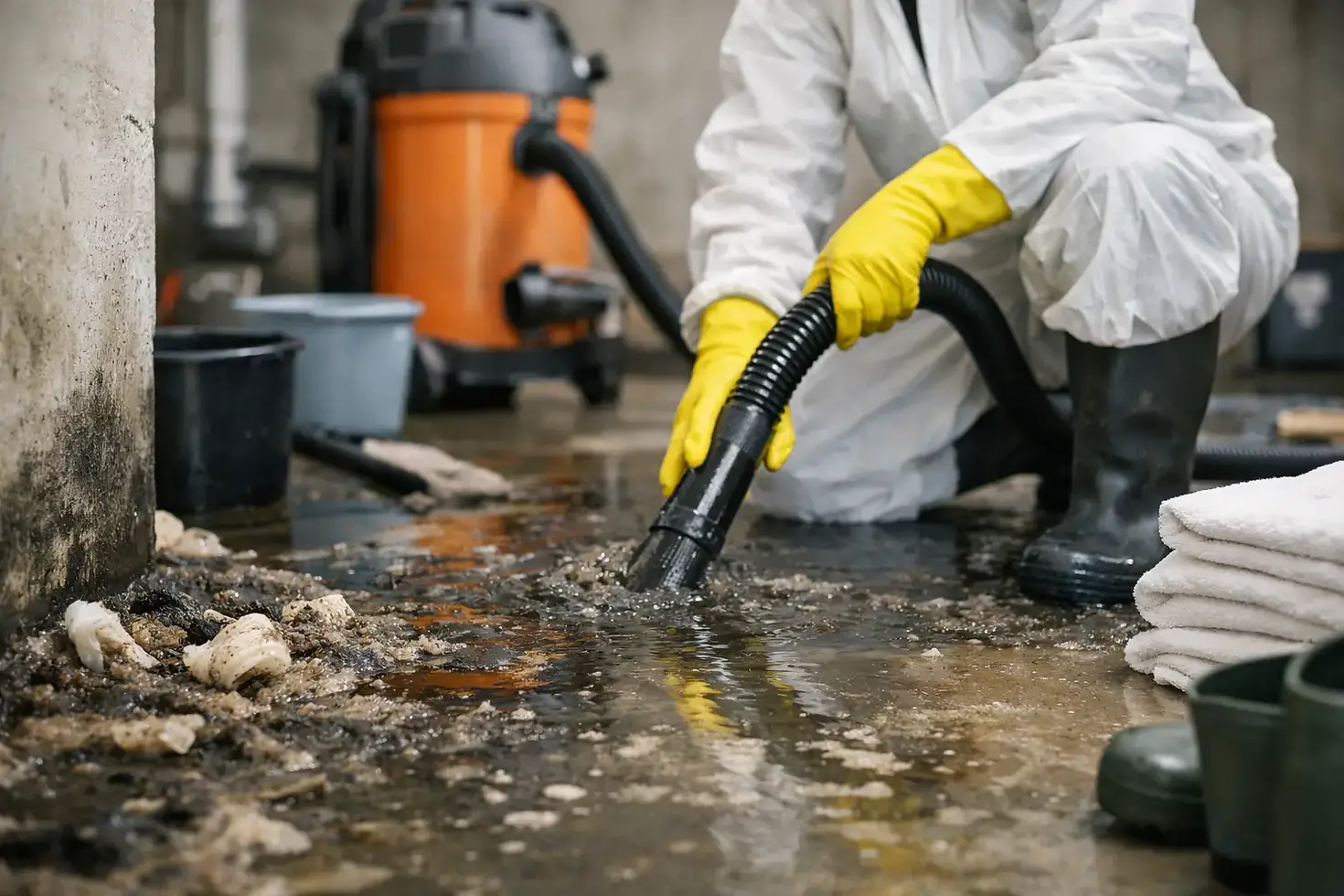
A qualified restoration team uses containment measures, commercial extraction equipment, moisture meters, air-moving and dehumidification equipment, and documented cleaning procedures. The goal is not to make the room look dry. The goal is to remove contamination and return affected structural materials to an appropriate dry condition.
Materials that should not be handled casually
Avoid trying to wash, store, or move items that have absorbed sewage. This includes upholstered furniture, mattresses, stuffed toys, paper records, books, cardboard boxes, area rugs, unsealed wood, and heavily affected clothing. Some items may be recoverable through specialized cleaning, but that decision should be based on the item’s material, contamination level, and value.
Food, medications, cosmetics, and personal-care products that contacted sewage should be discarded. This includes canned goods if the labels, seams, or containers cannot be fully cleaned and disinfected. When in doubt, do not keep consumable items that were in contaminated water.
Hard, washable items may be set aside for evaluation if they can be removed without spreading contamination. Wear disposable gloves and protective footwear if you must handle them, and keep them separate from clean areas. Do not transport contaminated contents in an unprotected personal vehicle.
A practical guide to sewage backup cleanup steps
Professional sewage backup cleanup generally follows a controlled sequence. First, the source is identified and stopped, often with help from a licensed plumber if a drain blockage, damaged sewer lateral, or failed backwater valve is involved. The restoration team then establishes containment and uses appropriate personal protective equipment before extracting contaminated water.
Next comes the removal of unsalvageable porous materials and contents. This step is often necessary to expose the full extent of water migration behind walls, beneath flooring, and around fixtures. Hard surfaces are cleaned and disinfected, while structural areas are dried using equipment selected for the size and conditions of the affected space.
Moisture monitoring continues throughout the drying process. A room can feel dry while moisture remains inside wall cavities, framing, or subfloor layers. Accurate readings help determine when drying is complete and provide useful documentation for insurance files.
After remediation, repairs can begin. That may include replacing insulation, drywall, flooring, trim, cabinetry components, or other materials removed during the cleanup. Separating emergency mitigation from reconstruction can make the work easier to manage, but coordinated planning helps avoid unnecessary delays.
Protect tenants, employees, and visitors
For rental and commercial properties, communication matters as much as containment. Restrict access to affected areas, post clear notices, and provide an alternate restroom if plumbing is out of service. Do not ask employees, maintenance staff, or tenants to clean sewage without training, proper protective equipment, and a defined safety process.
If sewage affected a customer-facing space, kitchen, daycare area, healthcare setting, or shared hallway, the response may require additional sanitation steps and coordination with local authorities or facility requirements. The right approach depends on the type of property and who may have been exposed.
Property managers should also keep a written record of notifications, service calls, photos, moisture readings, removal decisions, and invoices. Clear records reduce confusion when multiple parties are involved, including owners, tenants, insurers, plumbers, and restoration contractors.
Preventing another sewer backup
Once the emergency is under control, investigate why it happened. Common causes include blocked sewer lines, tree-root intrusion, collapsed or aging pipes, grease buildup, flushed wipes, heavy rainfall, and overloaded municipal systems. A plumber can inspect the line and recommend repairs or maintenance based on the cause.
For some properties, a backwater valve can help prevent sewage from flowing back through drains during a municipal sewer surcharge. It is not a cure for every plumbing issue, and it must be installed and maintained correctly. Regular drain inspections, careful disposal habits, and addressing slow drains early can reduce the chance of another costly event.
A sewage backup is disruptive, but fast, informed action can keep it from becoming a longer-term health and property problem. If contaminated water has entered your home or business, focus on keeping people out, preserving evidence, and getting the affected materials assessed before hidden moisture and contamination have time to spread.


Comments